La revolución del billón de dólares: el estado global de la publicidad en 2026

La inversión publicitaria global superó el billón de dólares, impulsada por la IA, el retail media y la economía de la atención. Qué cambia para las marcas.
The global advertising industry has crossed a historic threshold. Following a year of accelerated growth in 2025, the global ad market has not only surpassed the mythical $1 trillion ($1.08 trillion) investment mark but is fundamentally redefining where and how capital moves.
What we are witnessing is not merely an increase in spending, but a structural mutation driven by Artificial Intelligence (AI) and the rise of new commerce ecosystems.

1. Global investment: the triumph of digital
For the first time in history, digital advertising is no longer just a “part” of the budget; it is the budget. By 2025, digital formats captured approximately 73% of total investment, leaving traditional media (linear TV, print, and radio) in a fierce struggle for relevance.
Sustained Growth: While the global economy grows at a moderate pace, advertising investment is expanding at 5.9% annually, outperforming global GDP by nearly 3 percentage points.
Market Concentration: Five markets (USA, China, Japan, UK, and Germany) account for 73% of world spend. The United States leads with an investment nearing $400 billion.
2. The new giants: retail media and social commerce
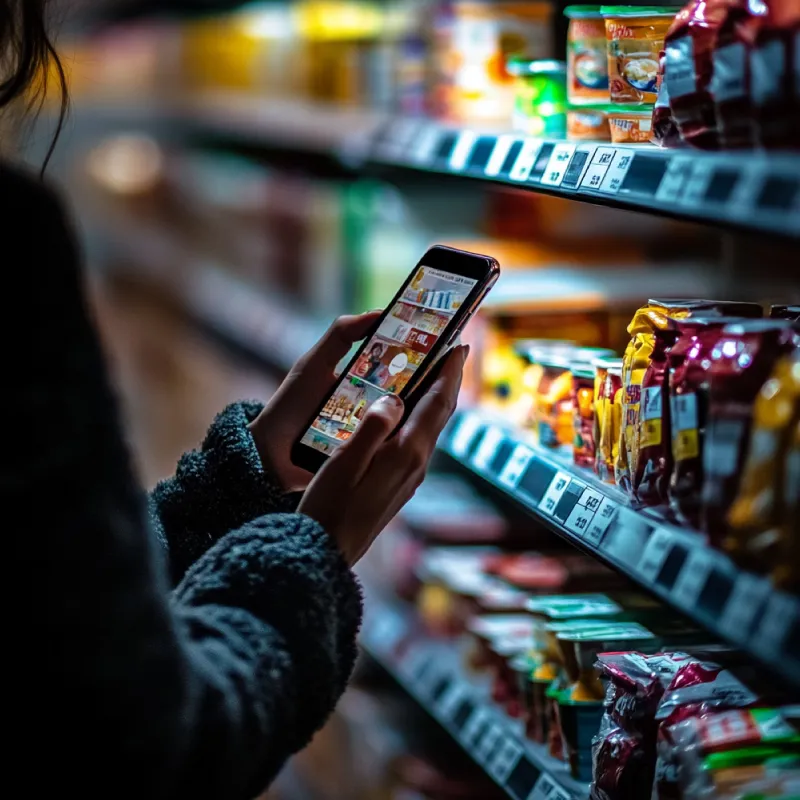
If the engine of the last decade was “Search” (Google), the engine of this decade is Retail Media. Brands are no longer just advertising where people look for information; they are advertising where people buy.
Key Fact: Amazon has solidified its position as the third global advertising giant, capturing nearly 76% of Retail Media investment in key markets, directly challenging the historic Google-Meta duopoly.

3. Generative AI: from experimentation to efficiency
Artificial Intelligence is no longer a “future trend”; it is the infrastructure supporting 79% of advertising investment, which is now managed via algorithms (programmatic buying).
Creative Optimization: 31% of specialists already use Generative AI for real-time creation and optimization of creative assets.
Data-Driven Decisions: The use of AI for audience analysis has allowed 67% of companies to increase their Return on Investment (ROI) by reducing ad waste on uninterested audiences.
4. The decline of “interruption” and the rise of “attention”
The market is shifting away from “click” metrics to focus on the Attention Economy. Due to saturation, value today lies in high-fidelity environments:
Connected TV (CTV): While traditional TV spending drops by 2.5%, advertising on streaming platforms (Netflix, Disney+, YouTube on TV) is growing at 18.4%. Advertisers seek the “big screen” experience combined with digital targeting.
Digital Audio and Podcasts: With a projected growth of 44% between 2023 and 2027, this format has become vital for reaching younger generations who actively avoid visual ads.

Outlook for investors and brands
The landscape for 2026 reveals a more resilient and tech-heavy advertising sector. Investment is aggressively shifting toward “Brandformance”: strategies that aim to build brand equity while simultaneously driving immediate, measurable sales (as seen in TikTok or Instagram Social Commerce).
Where to look?
Latin America: It remains one of the fastest-growing regions for Retail Media, already representing 11% of its digital investment.
Sustainability: Brands are beginning to measure the carbon footprint of their digital campaigns, a factor that will soon be decisive in major global tenders.
Preguntas frecuentes
¿Qué es el retail media?
Es la publicidad que se compra dentro de las tiendas en línea y las plataformas de comercio, donde la gente ya está decidiendo qué comprar. Las marcas pagan por aparecer en las búsquedas, las fichas de producto y las páginas de categoría del propio comercio.
¿Qué es el brandformance?
Es una estrategia que busca construir marca y vender al mismo tiempo, en lugar de separar las campañas de imagen de las de conversión. Es común en plataformas con social commerce, donde el mismo anuncio genera recordación y compra.
¿Qué es la televisión conectada (CTV)?
Es el contenido de streaming que se ve en un televisor conectado a internet. Para la publicidad combina la experiencia de la pantalla grande con la segmentación propia de los medios digitales.
Equipo Soult
Escrito por el equipo de Soult, la primera agencia Open Media, con oficinas en Bogotá, Ciudad de México y Miami. Quiénes somos.